Best Coffee Makers Under $100 for Every Brewing Style
We may earn a commission if you make a purchase through our links.
Excellent coffee does not require expensive equipment. The best coffee makers under $100 for drip, pour-over, immersion, French press, and cold brew — with specific model recommendations.
You don’t need to break the bank to brew café‑quality coffee at home. Modern coffee science tells us that temperature stability, extraction time, grind consistency, and water quality are the real drivers of flavor— not whether a machine costs $300 or $30. With a little knowledge and the right equipment, you can achieve a balanced, aromatic cup for under $100.
In this guide we’ll dive deep into the top performers in each major brewing category, explain why they work so well, compare their strengths and weaknesses, and give you actionable tips to get the most out of every brew. We’ll also include a robust FAQ section so you can make an informed decision the first time around.
Free: The First Brew Blueprint: 5-Gallon Amber Ale, Start to Sip
4 weeks from grain to glass
Table of Contents
No spam. Unsubscribe anytime.
- What Makes a Coffee Maker “Best” Under $100?
- Best Drip Machine – Bonavita Connoisseur 8‑Cup ($80)
- Best Pour‑Over – Hario V60 Starter Kit ($30)
- Best Immersion – AeroPress ($35)
- Best French Press – Bodum Chambord ($35)
- Best Cold Brew – Toddy Cold Brew System ($40)
- Best Overall Value – AeroPress (Re‑highlighted)
- Actionable Brewing Tips for Each Style
- Pros & Cons Summary Table
- Frequently Asked Questions
What Makes a Coffee Maker “Best” Under $100?
| Criterion | Why It Matters | Typical Budget‑Level Expectation |
|---|---|---|
| Temperature Accuracy | Extraction is optimal between 195‑205 °F (90‑96 °C). Deviation > 5 °F can under‑ or over‑extract, altering sweetness and bitterness. | Many <$50 drip machines stall at 180‑190 °F. |
| Even Water Distribution | Uniform contact with coffee grounds prevents channeling and promotes balanced flavor. | Inexpensive models often use a single spout that pours water in a narrow stream. |
| Brew Time Control | Extraction time (e.g., 3–4 min for drip, 30–45 s for AeroPress) is a core variable. | Manual methods (pour‑over, French press) naturally give you control; automatic machines may be rigid. |
| Build Quality / Durability | A sturdy chassis, high‑quality plastics or metal, and a reliable seal extend lifespan and maintain consistency. | Cheap “plastic melt” models can warp after a few months. |
| Ease of Use & Clean‑up | A intuitive interface encourages frequent brewing, while simple cleaning keeps coffee tasting fresh. | Complex machines add maintenance overhead and cost. |
| Versatility | Ability to brew multiple styles from one device maximizes ROI. | Single‑purpose gear restricts experimentation. |
No spam. Unsubscribe anytime.
When a brewer scores high in four or more of these categories while staying under $100, it earns a spot in our curated list.
Best Drip Machine – Bonavita Connoisseur 8‑Cup ($80)
Why It Stands Out
The Bonavita Connoisseur (model BV1900TS) is the only SCA‑certified drip coffee maker in the sub‑$100 tier. The Specialty Coffee Association (SCA) has a rigorous certification program that tests brew temperature, brew time, and extraction consistency across dozens of batches. Passing that test proves the machine can reliably hit the 195‑205 °F sweet spot, a temperature range that most budget drip makers miss by 10‑15 °F.
Key Technical Features
| Feature | Detail |
|---|---|
| Heating Element | 1500 W stainless‑steel coil, heats water in 2 min for a full 8‑cup pot. |
| Showerhead Design | 3‑hole pre‑infusion showerhead delivers a gentle “rain‑like” spray, reducing channeling. |
| Thermal Carafe | Double‑wall stainless steel with a vacuum seal; eliminates the need for a hot plate which can cause “cooking” of coffee after 30 min. |
| Programmable Auto‑Start | Set brew time up to 24 h in advance—great for waking up to fresh coffee. |
| Water Reservoir | 40‑oz (1.2 L) removable for easy filling and cleaning. |
Pros & Cons
| Pros | Cons |
|---|---|
| SCA‑certified temperature accuracy | No built‑in grinder (requires separate purchase) |
| Fast heat‑up (2 min) | Plastic water reservoir feels cheap compared to stainless alternatives |
| Robust thermal carafe retains heat | No milk frothing or espresso capability |
| Simple one‑button operation | Slightly louder than some ultra‑quiet models |
Best Pour‑Over – Hario V60 Starter Kit ($30)
Why It Stands Out
The Hario V60 is the gold standard for manual pour‑over brewing. The Starter Kit includes a plastic V60 dripper, a pack of 100 paper filters, and a glass server (often a 12‑oz mug). While ceramic V60s are beloved for aesthetics, the plastic version actually conducts heat better, keeping the brew water hotter for longer—an advantage when you’re brewing in a chilly kitchen.
Key Technical Features
| Feature | Detail |
|---|---|
| Ribbed Interior | 300 precisely‑machined ribs create turbulent flow, encouraging even saturation. |
| 135‑Degree Cone | Promotes optimal extraction time (≈ 2:30 min for 1 cup). |
| Paper Filters | 30‑µm thickness; removes oils for a clean, bright cup. |
| Compatible Kettle | Pair with a gooseneck kettle (e.g., Bonavita, Hario Buono) for precise pour control. |
| Portability | All components are lightweight and virtually unbreakable. |
Pros & Cons
| Pros | Cons |
|---|---|
| Inexpensive full kit (under $85 with kettle) | Requires manual skill—steeper learning curve |
| Excellent temperature retention (plastic dripper) | Paper filters add recurring cost |
| Easy to clean (single‑part design) | No built‑in carafe; need a separate server or mug |
| Highly portable for travel or camping | Brew volume limited to 1‑2 cups per pour |
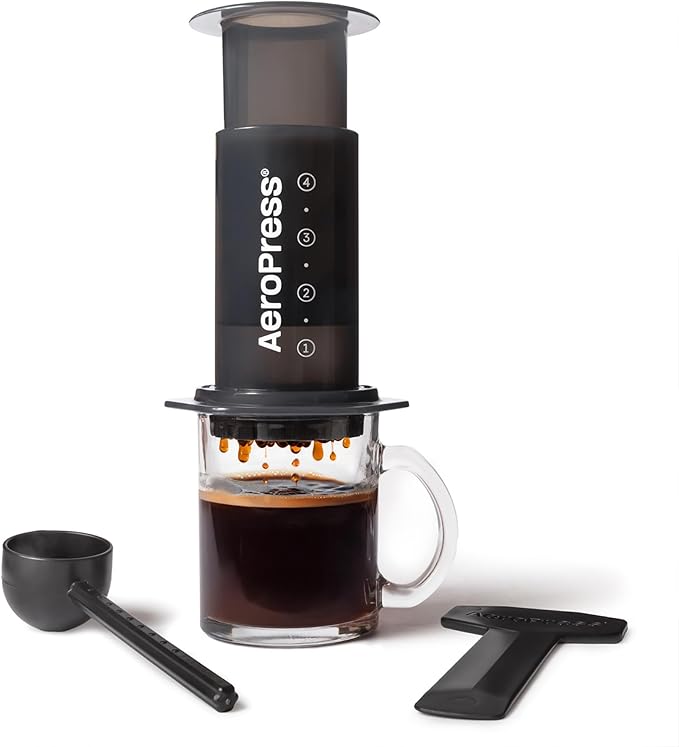
Best Immersion – AeroPress ($35)
Why It Stands Out
Invented in 2005 by Alan Adler (also known for the AeroSport tennis racket), the AeroPress is arguably the most versatile device in the under‑$100 arena. It combines immersion brewing (like a French press) with pressure extraction (similar to espresso), delivering a coffee that is smooth, low‑acidity, and remarkably quick (under 2 min total brew time). Moreover, its “AeroPress Champion” community has generated over 10,000 unique recipes, ranging from Thai‑style iced coffee to nitro‑style drinks.
Key Technical Features
| Feature | Detail |
|---|---|
| Two‑Stage Brewing | 1 min steep + 30‑45 s pressure push. |
| Micro‑Filters | 0.2 µm paper filter eliminates sediment; metal filter option for fuller body. |
| Pressure | Up to 0.35 bar (5 psi) when pressing—enough to extract espresso‑like flavors without a pump. |
| Materials | BPA‑free polycarbonate body, silicone seal, stainless‑steel plunger. |
| Travel‑Friendly | All components nest inside each other; fits in a backpack or carry‑on. |
Pros & Cons
| Pros | Cons |
|---|---|
| Extremely versatile (espresso, cold brew, American coffee) | Small batch size (1‑2 cups) |
| Fast brewing (≈ 2 min) | Paper filters add recurring expense (though reusable metal filter mitigates) |
| Easy to clean (rinses in seconds) | Learning curve for the “inverted” method |
| Durable, crush‑proof | No built‑in heater—requires hot water source |
Best French Press – Bodum Chambord ($35)
Why It Stands Out
The Bodur Chambord is the iconic French press that has been in production since 1954. Its borosilicate glass carafe resists thermal shock, while the stainless‑steel frame adds structural integrity. The dual‑plate plunger (rubber seal plus stainless steel disk) ensures consistent pressure and a clean separation of grounds.
Key Technical Features
| Feature | Detail |
|---|---|
| Capacity | 8 oz (237 ml) – 34 oz (1 L) models; standard 8‑cup (1 L). |
| Glass | Borosilicate (Thermoshield™) handles boiling water without cracking. |
| Plunger System | Two‑stage: silicone seal for filtration, metal disk for full immersion. |
| Design | Classic “café‑style” silhouette; fits in most dishwashers. |
| Filter | 100 µm mesh; retains most coffee oils while allowing body. |
Pros & Cons
| Pros | Cons |
|---|---|
| No electricity required – perfect for off‑grid or camping | Metal mesh can let fine sediment through |
| Large capacity (up to 1 L) for families or office use | Glass carafe can be heavy and break if dropped |
| Simple “set‑and‑forget” process | No temperature control (depends on water source) |
| Timeless aesthetic – fits any kitchen décor | Requires coarse grind; inconsistent grind can cause over‑extraction |
Best Cold Brew – Toddy Cold Brew System ($40)
Why It Stands Out
The Toddy was one of the first mass‑market cold‑brew kits (launched 1998). Its two‑part system—a large stainless‑steel brew tank and a polypropylene drip filter—produces a smooth, low‑acid concentrate that can be stored for up to 2 weeks in the refrigerator without flavor degradation. Because the brew is a concentrate (typically 1:1 coffee to water ratio), you can dilute it to taste, saving coffee grounds and time.
Key Technical Features
| Feature | Detail |
|---|---|
| Brew Ratio | 1 cup coffee to 1 cup water (makes concentrate). |
| Steep Time | 12‑24 h at room temperature (or 8 h in fridge). |
| Filter | 100‑µm stainless steel mesh plus a paper filter for extra clarity. |
| Capacity | 1.5 L brew tank – yields ≈ 14 servings of 8 oz each. |
| Storage | Concentrate can be kept in the same tank sealed for up to 2 weeks. |
Pros & Cons
| Pros | Cons |
|---|---|
| Produces batch‑size concentrate for easy on‑the‑go drinks | Long steep time (12‑24 h) |
| Low acidity – gentle on stomach | Initial cleaning of metal filter requires extra effort |
| No electricity needed – perfect for summer picnics | Requires large amount of coffee grounds per batch |
| Very affordable compared to commercial cold‑brew dispensers | No built‑in ice or milk frother |
Best Overall Value – AeroPress (Re‑highlighted)
If you can only pick one brewer and want to explore multiple styles, the AeroPress gives the highest versatility‑to‑cost ratio. Its ability to produce a coffee that resembles espresso, an American‑style drip, or a cold brew concentrate makes it a true all‑in‑one solution for under $35, leaving budget for premium beans, a quality grinder, and a gooseneck kettle.
Actionable Brewing Tips for Each Style
Below are practical, data‑backed steps to squeeze the most flavor out of each machine. Follow the exact numbers for temperature, grind, and time to replicate professional‑grade extraction.
1. Drip (Bonavita Connoisseur)
| Step | Detail | Why It Matters |
|---|---|---|
| Water Temperature | Pre‑heat water to 200 °F (93 °C); verify with a thermometer. | Ensures the machine’s internal sensor can maintain the SCA sweet spot. |
| Coffee Dose | 55 g coffee to 950 g water (1:17.3 ratio). | Produces a balanced extraction (≈ 18‑20 % TDS). |
| Grind Size | Medium‑fine, similar to sea‑salt. | Too fine → channeling; too coarse → under‑extraction. |
| Bloom | If using a separate pour‑over kettle, pre‑wet grounds for 30 s before full brew. | Releases CO₂, improves water‑ground contact. |
| Cleaning | Run a vinegar‑water rinse once a month to prevent mineral buildup. | Maintains temperature consistency. |
2. Pour‑Over (Hario V60)
| Step | Detail | Why It Matters |
|---|---|---|
| Filter Rinse | Warm water rinse paper filter for 5 s. | Removes papery taste and pre‑heats dripper. |
| Coffee Dose | 15 g coffee to 250 g water (1:16.7). | Ideal for a 8‑oz cup. |
| Grind | Medium‑fine, like table salt. | Influences flow rate and extraction time. |
| Pour Technique | Use a gooseneck kettle; start at the center, spiral outward, finish at centre. Total brew time: 2:30–3:00 min. | Even saturation prevents channeling. |
| Water | 200 °F (93 °C), filtered (≤ 15 ppm total dissolved solids). | Consistent temperature aids extraction. |
3. Immersion (AeroPress)
| Step | Detail | Why It Matters |
|---|---|---|
| Method | Inverted (plunger at bottom, brew chamber upside‑down). | Prevents premature drip, gives precise timing. |
| Coffee Dose | 17 g coffee to 250 g water (1:15). | Slightly stronger than drip, good for espresso‑style. |
| Water Temp | 175 °F (80 °C) for light roasts, 185 °F (85 °C) for dark roasts. | Lower temps reduce bitterness on light roasts. |
| Steep Time | 30 s. | |
| Press | Apply steady pressure for 20‑30 s. | |
| Filtration | Use metal filter for fuller body, paper for cleaner cup. | Adjust mouthfeel to preference. |
4. French Press (Bodum Chambord)
| Step | Detail | Why It Matters |
|---|---|---|
| Coffee Dose | 30 g coffee to 500 g water (1:16.7). | |
| Grind | Coarse, pea‑size. | |
| Water Temp | 200 °F (93 °C); pour slowly to fully saturate grounds. | |
| Steep | 4 min total. | |
| Plunge | Press slowly, steady pressure to avoid agitation that could release more fines. | |
| Serve Immediately | Pour coffee into a separate carafe to stop extraction. | Prevents over‑extraction and bitterness. |
5. Cold Brew (Toddy)
| Step | Detail | Why It Matters |
|---|---|---|
| Coffee Dose | 100 g coffee to 100 g water (1:1) for concentrate. | |
| Grind | Coarse, similar to French press. | |
| Water | Room‑temperature (68–72 °F / 20–22 °C). | |
| Steep | 12 h at room temperature or 8 h in fridge. | |
| Filter | After steep, press the metal filter, then optionally filter through a paper for extra clarity. | |
| Dilution | Mix concentrate 1:1 with cold water or milk. | |
| Storage | Keep sealed in fridge up to 14 days. |
Pros & Cons Summary Table
| Brewing Style | Model (Price) | Top Pros | Key Cons |
|---|---|---|---|
| Drip | Bonavita Connoisseur ($80) | • SCA‑certified temperature <br>• Fast heat‑up <br>• Thermal carafe keeps coffee hot | • No built‑in grinder <br>• Plastic reservoir |
| Pour‑over | Hario V60 Starter Kit ($30) | • Precise flow control <br>• Heat‑retaining plastic dripper <br>• Ultra‑portable | • Requires skillful pour <br>• Paper filter cost |
| Immersion | AeroPress ($35) | • Multi‑style (espresso, cold brew) <br>• Quick brew <br>• Travel‑ready | • Small batch size <br>• Paper filter waste (unless metal) |
| French Press | Bodum Chambord ($35) | • No electricity needed <br>• Large capacity <br>• Simple “set‑and‑forget” | • Some sediment <br>• Heavy glass |
| Cold Brew | Toddy Cold Brew System ($40) | • Low‑acid concentrate <br>• No electricity <br>• Long shelf‑life | • Long steep time <br>• Requires more coffee per batch |
| Overall Value | AeroPress ($35) | • Highest versatility per dollar <br>• Durable, easy clean | • Not ideal for large households (single‑cup) |
Frequently Asked Questions
1. Can I use pre‑ground coffee with these machines?
Yes, but grind size matters. Pre‑ground coffee is typically a medium grind optimized for drip machines. For pour‑over, French press, or AeroPress you’ll get sub‑optimal extraction unless you purchase a grinder that can produce the specific size required. For the best results, invest in a burr grinder (≈ $50–$120) and buy whole beans.
2. Do I need filtered water?
Using filtered water (≤ 15 ppm total dissolved solids) improves flavor clarity and prolongs the life of heating elements. A simple carbon filter pitcher or a reverse‑osmosis system works well. Unfiltered tap water can introduce chlorine or mineral taste that masks coffee nuances.
3. How often should I descale my drip machine?
If you have hard water (> 120 ppm calcium carbonate), descale every 2–3 months using a 1:1 vinegar‑water solution or a commercial descaling product. The Bonavita’s removable reservoir makes this easy.
4. Is a metal filter better than a paper filter?
Metal filters (e.g., stainless steel) allow more coffee oils and fine particles to pass, yielding a fuller body and higher TDS. Paper filters trap most oils, delivering a cleaner, brighter cup. Choose based on personal preference; many enthusiasts keep both on hand for flavor experimentation.
5. Can I brew tea or hot chocolate in these devices?
Drip and pour‑over machines can handle loose‑leaf tea (use the same basket) but be aware of residual coffee oils affecting flavor. The AeroPress is especially popular for tea (known as “AeroPress tea”) because its short steep time reduces bitterness. French presses work well for hot chocolate when you add cocoa powder and sugar directly to the water before plunging.
6. What’s the difference between “concentrate” and “ready‑to‑drink” cold brew?
A concentrate (like the Toddy output) is a 1:1 coffee‑to‑water brew that you dilute to taste. A ready‑to‑drink cold brew is already diluted (often 1:4) and may contain added sweeteners or flavors. Concentrates give you flexibility and a stronger coffee punch, while ready‑to‑drink is more convenient.
7. Do any of these machines come with a warranty?
- Bonavita Connoisseur: 2‑year limited warranty.
- Hario V60: 1‑year limited warranty (manufacturer).
- AeroPress: 5‑year limited warranty (covers defects, not wear).
- Bodum Chambord: 2‑year limited warranty.
- Toddy Cold Brew: 1‑year limited warranty.
Always register your product on the manufacturer’s website to ensure full coverage.
8. Which brewer is best for a small office (4–6 people)?
The Bonavita Connoisseur shines in an office setting because of its 8‑cup capacity, programmable timer, and thermal carafe that keeps coffee hot for hours without the “burnt” taste from a hot plate. Pair it with a ground‑coffee storage container to keep beans fresh.
9. How do I grind coffee for the AeroPress “inverted” method?
Use a medium‑fine grind, roughly the texture of sand. If the grind is too coarse, the brew will be weak; too fine and the pressure push becomes tough, increasing extraction time beyond the optimal 30 seconds.
10. Is it worth buying a separate grinder, or can I rely on pre‑ground coffee?
A quality burr grinder is the single most important upgrade you can make under $100. Freshly ground beans retain volatile aromatics that begin to dissipate within minutes of grinding. Even a modest $50 entry‑level burr grinder (e.g., Hario Skerton, Baratza Encore) will dramatically improve the flavor profile of any of the brewers listed.
Final Thoughts
Choosing the right coffee maker under $100 boils down to brewing style, desired capacity, and willingness to master technique.
-
If you love a set‑and‑forget, hands‑off morning routine, the Bonavita Connoisseur delivers café‑grade drip coffee with temperature precision you’ll rarely find at this price point.
-
If you crave control, ritual, and a clear, bright cup, the Hario V60 teaches you the fundamentals of pour‑over and can be paired with an inexpensive gooseneck kettle for a complete, portable setup.
-
If you want a single device that can do espresso‑style, cold brew, and everything in between, the AeroPress is the ultimate value proposition, backed by a passionate global community.
-
If you enjoy a bold, full‑bodied cup without fuss, the Bodum French Press provides a classic, low‑tech solution that works anywhere you have hot water.
-
If smooth, low‑acid coffee is your priority for iced drinks, the Toddy Cold Brew System gives you a high‑quality concentrate that stays fresh for weeks.
Regardless of the machine you select, remember that water quality, grind consistency, and precise temperature are the true arbiters of excellence. Pair your brewer with fresh beans, a decent burr grinder, and filtered water, and you’ll be serving specialty‑grade coffee without ever spending more than $100 on the equipment.
Happy brewing! ☕️
Affiliate Disclosure
Discussion
Sign in with GitHub to leave a comment. Your replies are stored on this site's public discussion board.
Continue Reading

Best Espresso Machines Under $500 in 2026: Real-World Picks for Home Baristas
June 6, 2026

Cold Brew Coffee Makers 2026: Best Picks for Summer
May 25, 2026

Toddy Cold Brew System Review: The Gallon-Scale Cold Brew Standard
April 18, 2026

Bodum Chambord French Press Review: The Template That Defined the Category
April 18, 2026