Automatic vs Manual Espresso Machines: Which Is Better for Home Use?
Automatic and manual espresso machines produce excellent results differently. A clear breakdown of super-automatic, semi-automatic, and manual lever machines to help you choose the right type.
Published on April 11 2026 – Updated for 2024 market data
When you set out to recreate café‑quality espresso in your kitchen, the first decision you’ll face isn’t about beans or water temperature – it’s about the type of machine you’ll use. The “automatic vs manual” debate isn’t a simple binary; it’s a spectrum that ranges from fully‑hand‑operated lever machines to one‑touch super‑automatic robots.
Each category delivers great coffee, but the amount of control, skill, maintenance, and cost you’re willing to invest changes the equation dramatically. Below we unpack the four main families of home espresso machines, compare their strengths and weaknesses, and give you actionable advice so you can pick the perfect unit for your lifestyle.
Table of Contents
- Understanding the Four Categories
- Deep Dive: Manual Lever Machines
- Deep Dive: Semi‑Automatic Machines
- Deep Dive: Automatic Machines
- Deep Dive: Super‑Automatic Machines
- Comparative Pros & Cons Table
- How to Choose the Right Machine for Your Home
- Actionable Tips for Getting the Best Espresso, Whatever the Machine
- Key Statistics That Matter in 2024
- Frequent Maintenance Checklist
- ## Frequently Asked Questions
Understanding the Four Categories
| Category | How It Works | Typical User | Price Range (USD) |
|---|---|---|---|
| Manual Lever | Pressure is generated by the user pulling a lever (piston or spring). No pump. | Purists, hobbyists, barista‑in‑training. | $700‑$2,500 |
| Semi‑Automatic | Electric pump supplies constant 9‑15 bar pressure. User starts/stops extraction, grinds, and tamps. | Enthusiasts who enjoy tweaking dose, time, and temperature. | $200‑$800 |
| Automatic | Same pump as semi‑auto, but includes a flow sensor that stops extraction automatically after a preset volume. | Users who want repeatable shot timing without a timer. | $400‑$1,200 |
| Super‑Automatic | Integrated grinder, dosing system, brewing chamber, and steam wand; everything runs at the press of a button. | Busy households, office settings, “set‑and‑forget” coffee lovers. | $600‑$3,500 |
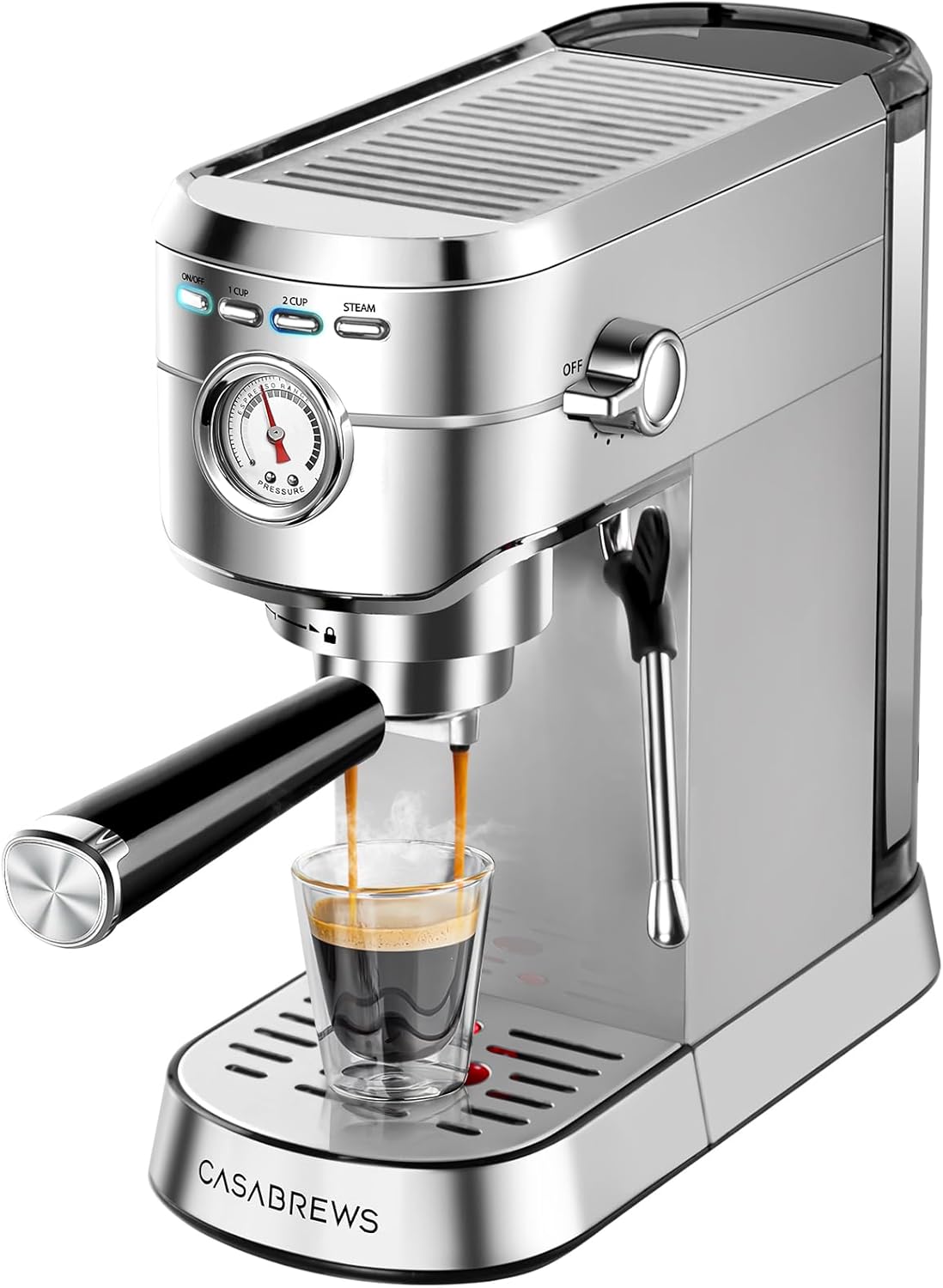
Check current prices: Manual-control pick: Gaggia Classic Pro — check · Semi-automatic pick: Breville Bambino Plus — check · Budget semi-auto: CASABREWS CM5418 ($140) — check · All-in-one pick: Breville Barista Express — check
Key distinction: Control vs Convenience. Manual machines give you 100 % control (and responsibility). Super‑automatic machines give you 100 % convenience (and surrender of control). Semi‑ and automatic models sit in the middle, offering a blend of both worlds.
Deep Dive: Manual Lever Machines
What Sets Them Apart?
Manual-control pick: Gaggia Classic Pro — check price on Amazon →
- Pure Mechanical Pressure – No electric pump; you generate pressure by pulling a lever. This creates a direct, tactile connection to the brewing process.
- Variable Pressure Profile – By adjusting the speed and depth of the lever stroke you can craft a custom pressure curve, something most pump‑based machines cannot replicate without a pressure‑profiling module.
- Simplicity of Design – Fewer electronic components mean a longer lifespan for the core brewing mechanism, provided you keep up with routine cleaning.
Popular Models (2024)
| Model | Boiler Type | Max Pressure | Notable Feature |
|---|---|---|---|
| La Marzocco Leva | Dual boiler | 12 bar (lever) | Commercial‑grade PID, 2‑stage lever |
| Rancilio Silvia Lever (by Elektra) | Single boiler | 15 bar (spring‑assisted) | Spring‑loaded lever for smoother pull |
| Bezzera Manual Lever | Dual boiler | 13 bar | Swivel‑head design, “espresso‑dial” pressure gauge |
Pros
| ✔️ | Detail |
|---|---|
| Ultimate control – You decide exact pressure, duration, and pre‑infusion dynamics. | |
| Hands‑on learning – Excellent for mastering the fundamentals of espresso extraction. | |
| Low long‑term cost – No electronic parts to replace; a well‑maintained lever can last 20 + years. | |
| Aesthetic appeal – Classic, bar‑style look that becomes a conversation piece. |
Cons
| ❌ | Detail |
|---|---|
| Steep learning curve – Consistency requires practice; beginners may produce sour or weak shots. | |
| Physical effort – Pulling a lever can be tiring, especially for users with limited hand strength. | |
| Limited automation – No built‑in grinder, milk frother, or programmable dosing. | |
| Higher upfront cost – Quality lever machines often start at $1,000+. |
Who Should Consider a Manual Lever?
- Barista‑in‑training who wants to feel every variable.
- Design‑focused homeowners who value a machine as a piece of kitchen art.
- Coffee‑science hobbyists interested in pressure profiling experiments.
Deep Dive: Semi‑Automatic Machines
Core Mechanics
Semi-automatic pick: Breville Bambino Plus — check price on Amazon →
Budget semi-auto: CASABREWS CM5418 ($140) — check price on Amazon →
- Pump – Typically a vibratory pump delivering 9‑15 bar pressure.
- PID Temperature Control – Modern units use a PID (Proportional‑Integral‑Derivative) controller to keep water temperature within ±0.1 °C, a critical factor for flavor consistency.
- User‑Controlled Extraction – You decide when to start and stop the shot (often with a simple “brew” button).
Top Picks for 2024
| Model | Boiler | PID? | Recommended For |
|---|---|---|---|
| Breville Barista Express BES870XL | Single | Yes | Beginners seeking decent control at a modest price. |
| Rancilio Silvia | Single | Optional (after‑market) | Mid‑range enthusiasts who want a solid foundation for upgrades. |
| Gaggia Classic Pro | Single | Yes | Users who love a “classic” Italian aesthetic with modern reliability. |
| ECM Classika PID | Dual | Yes | Serious home baristas with a budget of $1,200‑$1,500. |
Pros
| ✔️ | Detail |
|---|---|
| High quality ceiling – With proper technique, semi‑autos can produce café‑grade espresso. | |
| Affordability – A solid entry point starts around $200‑$300. | |
| Upgradeable – Many units support aftermarket PID controllers, pressure gauges, and even dual‑boiler conversions. | |
| Routine maintenance is straightforward – You can backflush the group head, descale, and replace gaskets yourself. |
Cons
| ❌ | Detail |
|---|---|
| User responsibility – Inconsistent grind, tamp, or timing yields variable results. | |
| No auto‑stop – You must monitor shot time, which can be a hassle during a busy morning. | |
| Separate grinder needed – Most semi‑autos don’t include a grinder, adding to overall cost. | |
| Learning curve – While less intimidating than lever machines, mastering temperature, pressure, and dosing still takes practice. |
Who Should Choose a Semi‑Automatic?
- Coffee hobbyists who love tweaking variables and tracking shot data.
- Budget‑conscious espresso lovers who want espresso‑shop quality without a $2,000+ price tag.
- DIY‑enthusiasts who plan to mod the machine later (PID upgrades, pressure profiling kits).
Deep Dive: Automatic Machines
How They Differ from Semi‑Auto
Automatic machines retain the pump and PID of a semi‑auto but add a flow meter or pressure sensor that stops extraction after a predetermined volume (e.g., 30 ml). This eliminates the need for a manual timer and helps achieve shot‑to‑shot repeatability.
Popular 2024 Models
| Model | Grinder Integrated? | Milk System | Estimated Price |
|---|---|---|---|
| DeLonghi Magnifica ESAM3300 | No | Manual steam wand | $600 |
| Saeco PicoBaristo | No | Automatic milk frother | $900 |
| Jura E8 | Yes (built‑in) | Automatic milk system | $2,000 |
Pros
| ✔️ | Detail |
|---|---|
| Consistent shot volume – The machine takes the guesswork out of timing. | |
| Ease of use – Ideal for families or office environments where multiple users need reliable results. | |
| Often includes a basic grinder – Some models integrate a conical burr grinder for convenience. | |
| Programmable profiles – Store multiple recipes for different bean origins or roast levels. |
Cons
| ❌ | Detail |
|---|---|
| Higher price than semi‑auto – Typically $400‑$1,200. | |
| Limited pressure control – You cannot shape the pressure curve beyond start/stop. | |
| More electronics → higher repair cost – Sensors and microcontrollers add complexity. | |
| Potentially slower workflow – Auto‑stop may add a few seconds compared to manual stop. |
Who Should Opt for an Automatic Machine?
- Multi‑user households where consistency outweighs the desire for deep customization.
- Busy professionals who need a fast, reliable shot every morning without a timer.
- Coffee beginners who are uncomfortable with manual shot timing but want better control than a super‑automatic.
Deep Dive: Super‑Automatic Machines
The “One‑Button” Experience
All-in-one pick: Breville Barista Express — check price on Amazon →
Super‑automatic espresso makers compress the entire workflow into a single press: grinding, dosing, tamping, brewing, and milk texturing (if the model includes a milk system). Advanced units feature smart sensors, Wi‑Fi connectivity, and app‑based recipe management.
2024 Best‑Sellers
| Model | Built‑in Grinder | Milk System | Key Tech |
|---|---|---|---|
| Jura Z8 | Yes (15 mm flat burr) | Automatic “Pulse” milk system | AI‑driven bean recognition, Bluetooth |
| Breville Barista Touch | Yes (15 mm conical) | Automatic steam wand with temperature probe | Touchscreen, customizable profiles |
| Philips 3200 Series | Yes (12 mm conical) | AquaClean milk system | One‑Touch cleaning, Milk froth would last up to 3,000 drinks before descaling |
Pros
| ✔️ | Detail |
|---|---|
| Speed – Espresso in 30‑60 seconds from bean to cup. | |
| Zero skill threshold – Ideal for users who want café quality without learning the craft. | |
| Built‑in cleaning cycles – Automatic rinse, descaling, and milk system cleaning programs. | |
| Consistent results – Sensors maintain temperature, pressure, and dosage within tight tolerances. | |
| Space‑saving – No separate grinder or frother needed. |
Cons
| ❌ | Detail |
|---|---|
| Higher ceiling is limited – Even the best super‑automatic cannot match the nuance a skilled barista can extract on a semi‑auto. | |
| Repair costs – Proprietary parts (grinders, pumps, sensors) can cost $300‑$800 to replace. | |
| Customization constraints – Fine‑tuning pressure curves or experimenting with pre‑infusion times is usually impossible. | |
| Bean freshness – Built‑in grinders often have smaller hopper capacities (200‑300 g), making rapid consumption of fresh beans harder. | |
| Noise – Integrated grinders and pumps can be louder than separate units. |
Who Should Buy a Super‑Automatic?
- Families or office break rooms where multiple users need the same quality coffee with minimal training.
- Time‑pressed individuals who view espresso as a functional drink rather than a hobby.
- Tech enthusiasts who enjoy app‑controlled brewing and automatic cleaning cycles.
Comparative Pros & Cons Table
| Feature | Manual Lever | Semi‑Automatic | Automatic | Super‑Automatic |
|---|---|---|---|---|
| Control over pressure curve | Full (hand‑controlled) | Moderate (pump at constant pressure) | Low (fixed pump pressure) | Minimal |
| Ease of use for beginners | Low (requires skill) | Moderate (requires learning) | High (auto‑stop) | Very high (one‑button) |
| Initial cost | $700‑$2,500 | $200‑$800 | $400‑$1,200 | $600‑$3,500 |
| Maintenance complexity | Simple mechanical → low cost | Moderate (gaskets, backflush) | Higher (sensors, electronics) | Highest (proprietary parts) |
| Potential espresso quality ceiling | High (expert barista) | Very High (expert user) | High (consistent) | Moderate (factory‑tuned) |
| Footprint | Large (dual boiler often) | Medium | Medium | Compact (integrated) |
| Best for | Purists, learners, coffee scientists | Hobbyists, DIY modders, quality seekers | Multi‑user homes, office kitchens | Busy families, tech‑savvy users |
| Typical lifespan | 15‑25 years (with care) | 10‑15 years | 8‑12 years | 5‑10 years (depends on support) |
How to Choose the Right Machine for Your Home
-
Define Your Goal
- “I want to experiment with pressure profiling.” → Manual lever.
- “I need fast, consistent coffee for the whole family.” → Super‑automatic.
-
Assess Your Budget
- Under $500: Look at entry‑level semi‑autos (e.g., Breville Bambino, DeLonghi Dedica).
- $500‑$1,200: Mid‑range semi‑autos or automatic models (e.g., Gaggia Classic Pro, Saeco PicoBaristo).
- $1,200+: High‑end semi‑autos, super‑automatics, or quality lever machines.
-
Consider Space & Noise
- Lever machines often need a dual‑boiler or large single‑boiler which can occupy 15‑20 inches of counter width.
- Super‑automatics compress everything but may be louder due to the integrated grinder.
-
Think About Long‑Term Servicing
- Verify the availability of spare parts in your region.
- Check if the manufacturer offers a refurbished program – a good way to extend machine life cost‑effectively.
-
Evaluate the Bean Supply Chain
- If you roast your own beans, a separate high‑quality grinder (e.g., Baratza Sette 270) pairs well with a semi‑auto.
- For limited storage, a super‑automatic’s smaller hopper may mean you have to grind more frequently to keep beans fresh.
-
Test Before You Buy
- Many specialty coffee shops now have a “espresso machine demo corner.” Spend 30 minutes pulling a shot on each type to feel the workflow.
Actionable Tips for Getting the Best Espresso, Whatever the Machine
| Tip | Why It Matters | How to Apply |
|---|---|---|
| Use freshly roasted beans (7‑14 days post‑roast). | Coffee oils oxidize quickly, degrading flavor. | Buy from a local roaster and store beans in an airtight container away from light. |
| Grind size should be dialed in for each machine. | Lever machines often need a finer grind than semi‑autos due to shorter extraction times. | Start with a dose of 18 g and adjust until the shot yields 25‑30 ml in 25‑30 s (semi‑auto) or 30‑35 ml in 20‑25 s (lever). |
| Maintain a brew temperature of 92‑96 °C (197‑205 °F). | Temperature swing of ±2 °C can change acidity and bitterness dramatically. | Use a PID‑enabled machine or a Thermal Probe (e.g., Instabar) to verify temperature before brewing. |
| Consistent tamp pressure (≈30 kg). | Inconsistent tamp leads to channeling and uneven extraction. | Use a calibrated tamper with a built‑in pressure gauge, or practice with a bathroom scale. |
| Pre‑infuse for 2‑4 seconds on semi‑automatic/automatic machines. | Allows coffee bed to settle, reducing channeling. | Many machines have a pre‑infuse setting; if not, manually start the pump for a few seconds before the full flow. |
| Backflush daily (if your machine has a three‑way valve). | Prevents coffee oils from building up in the group head, preserving flavor. | Insert a blind filter, add a cleaning tablet, and run the brew cycle for 10 seconds, repeat 3‑5 times. |
| Descale every 2‑3 months (hard water areas). | Scale reduces heating efficiency and can cause temperature drift. | Use a citric‑acid based descaler; run the machine’s cleaning cycle as per manufacturer instructions. |
| Clean the milk system after each use. | Milk residues cause bacterial growth and off‑flavors. | Rinse steam wand with hot water, purge steam for 10 seconds, and run the automatic milk cleaning program (if equipped). |
| Record shot data. | Tracking dose, grind, temperature, and time helps you replicate good shots. | Use a simple spreadsheet or an app like Barista Buddy to log variables. |
| Rotate your grinder burrs every 12‑18 months. | Worn burrs produce inconsistent particle size distribution. | Purchase OEM replacement burrs or compatible third‑party sets. |
Key Statistics That Matter in 2024
Ultimately, the right machine comes down to how much control, convenience, maintenance, and budget suit your routine — the comparisons above break down where each type fits.
Frequent Maintenance Checklist
| Frequency | Task | Tools Needed |
|---|---|---|
| After Every Use | Purge steam wand, wipe down portafilter and group head | Clean cloth, small brush |
| Daily | Backflush (if applicable) | Blind filter, cleaning tablet |
| Weekly | Clean grinder (brush out burrs) | Grinder brush, vacuum |
| Monthly | Descale machine (follow manufacturer’s instructions) | Descaling solution, large container |
| Quarterly | Replace group head gasket & shower screen | Screwdriver, replacement gaskets |
| Annually | Deep clean boiler (run cleaning solution) | Boiler cleaner, gloves |
| Every 12‑18 months | Service pump and pressure gauge (professional) | Service appointment |
Pro tip: Keep a maintenance log on your fridge. Simple checkboxes motivate consistent care and extend machine life.
Frequently Asked Questions
1. Can I achieve café‑quality espresso with a budget semi‑automatic machine?
Answer: Absolutely. Brands like the Gaggia Classic Pro and Breville Barista Express can produce award‑winning shots when paired with a good grinder and a disciplined routine (proper dose, tamp, temperature). The key is consistency—learn to read the flow and adjust grind size accordingly.
2. Do super‑automatic machines waste coffee compared to separate grinders?
Answer: Modern super‑automatics use dose‑by‑weight technology that measures beans to within ±0.1 g, which is comparable to dedicated grinders. However, the built‑in grinders often have smaller burrs, leading to slightly higher particle variation. For most users, the convenience outweighs the marginal waste.
3. Is a manual lever machine worth the extra effort if I already have a good semi‑auto?
Answer: If you enjoy the process and want to explore pressure profiling, a lever machine offers an unmatched tactile experience. But if your primary goal is a quick, reliable cup, a semi‑auto is more practical. Many enthusiasts own both: a lever for weekend experimentation and a semi‑auto for daily use.
4. How long does it take to learn to pull a good shot on a manual lever?
Answer: The learning curve varies, but most users reach a consistent 25‑30 ml shot after 20‑30 practice sessions (roughly 2‑3 hours total). Investing in a pressure gauge and timing your pulls accelerates progress.
5. What is the biggest maintenance mistake people make with super‑automatic machines?
Answer: Skipping the automatic cleaning cycle after milk frothing. Milk residues can clog the steam wand and cause bacterial growth. Set a reminder on your phone to run the cleaning program at least once a week, even if you only make a few drinks.
Final Thoughts
Choosing between automatic and manual espresso machines isn’t about “better” in an absolute sense; it’s about alignment with your lifestyle, budget, and coffee ambitions.
- If you love the ritual, want to experiment with pressure, and don’t mind a steeper learning curve, a manual lever or high‑end semi‑automatic will keep you engaged for years.
- If you need repeatable quality with minimal fuss, a semi‑automatic or automatic model offers the best balance of control and convenience.
- If espresso is more of a functional morning boost than a hobby, the super‑automatic will deliver café‑level drinks at the press of a button while handling cleaning and maintenance for you.
Remember, the best espresso machine is the one you’ll use consistently. Pair your chosen machine with fresh beans, a reliable grinder, and a regular cleaning schedule, and you’ll enjoy café‑standard espresso right from your kitchen counter.
Happy brewing! ☕️
Free Download
The First Brew Blueprint: 5-Gallon Amber Ale, Start to Sip
4 weeks from grain to glass
Instant download. No spam. Unsubscribe anytime.
Affiliate Disclosure