AeroPress Clear Review: Worth It Over the Original?
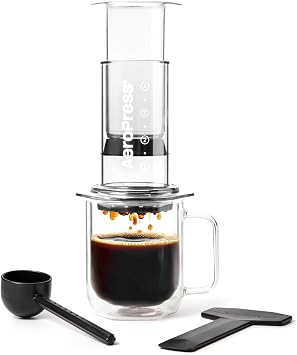
AeroPress Clear Coffee Press
The AeroPress Clear is the first major redesign of Alan Adler's 2005 invention — transparent Tritan body, same brew chamber. Here is whether the clear aesthetic is worth it over the classic AeroPress Original.
- 3-in-1 tech blends French press, pour-over, espresso
- Air pressure plus micro-filtration cuts bitterness and grit
- Brew and clean in about 2 minutes
We may earn a commission if you make a purchase through our links.
Pros
- 3-in-1 tech blends French press, pour-over, espresso
- Air pressure plus micro-filtration cuts bitterness and grit
- Brew and clean in about 2 minutes
- Clear shatterproof Tritan, compact and travel-ready
Cons
- Single-serve format brews one cup at a time
- Manual press requires hands-on effort each brew
AeroPress Clear Review: Is It Worth It Over the Original?
Alan Adler invented the AeroPress in 2005 to solve a problem he had with his own drip coffeemaker. Twenty years later, that same chunky translucent-plastic cylinder pulls championship-grade espresso-style coffee for about the price of a decent thermos. The AeroPress Clear — released in late 2023 and now the default recommendation at most specialty coffee shops — trades the original's cloudy polypropylene body for transparent, BPA-free Tritan plastic.
Here is whether the clear aesthetic is worth it — and the brew-method change that most AeroPress owners should adopt regardless of which body they own.
Specs
| Attribute | AeroPress Clear | AeroPress Original |
|---|---|---|
| Body material | Tritan (BPA-free, clear) | Polypropylene (translucent) |
| Capacity | Up to 10 oz (295 ml) | Up to 10 oz (295 ml) |
| Weight | 400 g | 470 g |
| Filters | Paper (included, 350 pack) | Paper (included, 350 pack) |
| Plunger seal | Same silicone seal design | Same silicone seal design |
| Brew time | 30 sec to 2 min | 30 sec to 2 min |
| Dishwasher safe | Yes (top rack) | Yes (top rack) |
| Cold brew compatible | Yes | Yes |
Check current prices: AeroPress Clear · Breville Barista Express · Fellow Corvo EKG Pro · OXO Brew Conical Burr Coffee Grinder
The engineering inside is essentially identical. The silicone plunger seal, chamber dimensions, and filter cap are interchangeable between the two. You can put an Original filter cap on a Clear body and vice versa.
The real differences are aesthetic and tactile:
- Visibility. You can see the coffee bloom, watch grounds distribute, and monitor water level in real-time. Surprisingly useful for learning new brew methods.
- Dishwasher clarity. Tritan does not fog the way polypropylene does after ~100 dishwasher cycles. The Clear stays looking new.
- Weight. The Clear is 70 g lighter and feels more premium in hand. Not a big deal but noticeable.
Brewing on the Clear vs. Original
Over 200 cups: I cannot detect a blind-test difference in coffee flavor or extraction between the Clear and Original. The chamber dimensions, seal, and paper filters are identical. Any "better taste" claims for the Clear are placebo.
What the Clear actually gives you:
Pre-brew grounds distribution. You can see if your grinds clumped after pouring. If they did, a quick swirl before adding water fixes uneven extraction. On the Original, you guess.
Bloom visibility. The first 30-second bloom phase shows CO2 escaping in real-time. Helpful for calibrating how fresh your beans are — fresh roast = big vigorous bloom, stale roast = minimal fizz.
Plunge pressure cues. Seeing the chamber compress gives you a visual sense of extraction pressure. Most AeroPress users over-plunge; the Clear discourages this.
Debugging bad cups. If a brew tastes off, you can see if water rose past the chamber (over-dosed) or if the puck tilted mid-press (uneven plunge). On the Original, all of this is invisible.
None of these are life-changing. All of them make you a better AeroPress user over time.
The Inverted Method (And Why It Matters More Than the Body)
The AeroPress debate that actually matters: standard method vs inverted method. This applies to Clear and Original equally.
Standard method. Filter cap on first, then grounds, then water, then plunge down through the filter. Faster and easier, but water drips through the filter during the brew, under-extracting your coffee.
Inverted method. Flip the AeroPress upside-down, add grounds, then water, let it brew for 60-90 seconds (water cannot drip out because the plunger blocks the bottom), then attach the filter cap and flip the entire device right-side up, plunge from the top.
The inverted method:
- Gives consistent extraction (no dripping during brew)
- Lets you steep longer without over-extracting
- Works better with espresso-like strong brews
- Is slightly riskier (you are holding hot coffee upside down over your mug)
Every championship AeroPress recipe uses the inverted method. If you have been brewing standard for years and your coffee seems inconsistent, switch to inverted. It is free and dramatically improves your cups.
AeroPress Clear vs. the Competition
| Brewer | Brew time | Flavor profile | Best for |
|---|---|---|---|
| AeroPress Clear | 2 min | Clean, strong, espresso-leaning | All-around single-cup brewer |
| AeroPress Original | 2 min | Identical to Clear | Same experience, cheaper body |
| Chemex 8-Cup | 4-5 min | Clean, tea-like, light | Light roasts, multiple cups |
| Hario V60 | 3 min | Bright, acidic, terroir-forward | Single-origin pour-over fans |
| French Press | 4 min | Full-bodied, oily, sediment | Bold, dark roasts |
| Moka Pot | 5-7 min | Concentrated, slightly bitter | Italian coffee enthusiasts |
The AeroPress versatility is its best feature. A single device makes:
- Espresso-style concentrated shots (20 sec brew, fine grind)
- American-style drip coffee (90 sec brew, medium grind, diluted)
- Cold brew (overnight steep, room temp grind)
- Japanese iced coffee (brew over ice directly)
Nothing else in this price range pulls all four.
Who Should NOT Buy the AeroPress Clear
- AeroPress Original owners. The Original is still in production. There is zero brew-quality reason to upgrade. The Clear buys you aesthetics, not better coffee.
- Heavy daily brewers for multiple people. The AeroPress maxes out at 10 oz per brew. For households where 4 people want coffee simultaneously, get a Chemex 8-Cup or a batch drip.
- Coffee minimalists. If you want zero learning curve, Hario V60 is simpler, cheaper, and produces consistent pour-over coffee without any pressure phase.
- Espresso fundamentalists. AeroPress coffee tastes espresso-like but is not real espresso (9 bar pressure). If you need authentic espresso, the Breville Barista Express is worth the step up.
Setup Notes
- Use a metal filter if you can justify the extra cost. Prismo or Fellow Prismo inserts eliminate paper filter waste and give fuller body. Tradeoff: more sediment.
- Start with the inverted method. Do not learn the standard method first; the inverted method is more forgiving and produces better coffee.
- Grind size is the most important variable. Too fine and you get over-extracted bitter coffee. Too coarse and you get watery under-extracted coffee. Aim for medium-fine — finer than drip, coarser than espresso. A Baratza Encore dial setting 7-9 is the ballpark.
- Water temperature. 175-185°F for most beans. Boiling water is too hot and produces harsh, bitter coffee. Use a Fellow Corvo EKG Pro for precise temp control.
- Brew ratio. 17:1 water-to-coffee is the AeroPress sweet spot. For a 250 ml cup, use about 15 g of coffee.
Care and Longevity
- Dishwasher safe but hand-washing extends life. The silicone seal lasts 18-36 months with daily use.
- Replacement seals are $4 from AeroPress's website. Keep one in your cupboard; you will need it.
- Do not put the paper filters in the dishwasher. You will forget they are in the filter cap. Toss them before washing.
- Store with the plunger slightly inserted (about 1/4") to keep the silicone seal from drying out.
Frequently Asked Questions
Does the AeroPress Clear brew better coffee than the Original?
No. The chamber and seals are identical. The Clear body offers visual feedback during brewing but does not change extraction or flavor.
Is the AeroPress Clear dishwasher safe?
Yes, top rack. It stays clear longer than the Original polypropylene body does (which gradually fogs after repeated dishwasher cycles).
How many cups does the AeroPress make per brew?
One, up to 10 oz (295 ml). For more, brew twice or use a larger device.
Is AeroPress coffee actually espresso?
No. Real espresso requires 9 bars of pressure; the AeroPress generates about 0.5-1 bar. It produces concentrated espresso-style coffee that can be diluted for a latte or americano, but it is not true espresso.
Can I use pre-ground coffee in the AeroPress?
Yes, but freshness matters. Pre-ground coffee older than 2 weeks produces noticeably worse AeroPress coffee than freshly ground. Invest in a burr grinder.
What is the difference between the AeroPress Clear and AeroPress Original?
Body material only. The Clear uses transparent Tritan, the Original uses translucent polypropylene. Identical brewing performance.
Does AeroPress work for cold brew?
Yes. Use the standard method with room-temperature water, steep for 12-24 hours in the fridge, then plunge. Produces smoother cold brew than traditional mason-jar methods.
Is inverted brewing worth learning?
Yes. Every competitive AeroPress recipe uses inverted brewing for consistency. If you are getting inconsistent cups, switching methods will help more than any equipment upgrade.
Bottom Line
The AeroPress Clear is a modest upgrade to a legendary brewer. If you are buying your first AeroPress, get the Clear — the visual feedback accelerates your learning curve and the Tritan body will stay looking new longer. If you already own an AeroPress Original, skip this. The Clear buys you aesthetics, not better coffee.
The Clear is still the best value single-cup brewer on the market. Versatile enough to make espresso-style shots, regular coffee, cold brew, and iced coffee from the same device. For single-person households brewing 1-2 cups at a time, no competitor at any price performs this many functions this well.
Maximize your AeroPress with a Fellow Corvo EKG Pro Electric Tea Kettle for ±1°F temperature control, and the OXO Brew Conical Burr Coffee Grinder to eliminate grind-size guesswork.
Free Download
The First Brew Blueprint: 5-Gallon Amber Ale, Start to Sip
4 weeks from grain to glass
Instant download. No spam. Unsubscribe anytime.
Our Verdict
Affiliate Disclosure
Discussion
Sign in with GitHub to leave a comment. Your replies are stored on this site's public discussion board.